October 3, 2025
WRA Mini Pod: Water Meters for the White Mountain Apache Tribe
Learn how water meters will help the White Mountain Apache Tribe save water in a drier and hotter West.
Want to listen on a different platform? Please join us and subscribe on Spotify, Amazon Podcasts, Youtube, Apple Podcasts, or wherever you listen to podcasts to stay up to date with our latest episodes. You can also always search for 2 Degrees Out West wherever you like to listen.
We’d love your feedback so we can continue to make our podcast the best it can be. Leave us a review!
The impacts of climate change are becoming harder and harder to ignore. Many communities in the Interior West are on the front lines of dealing with these impacts – especially drought.
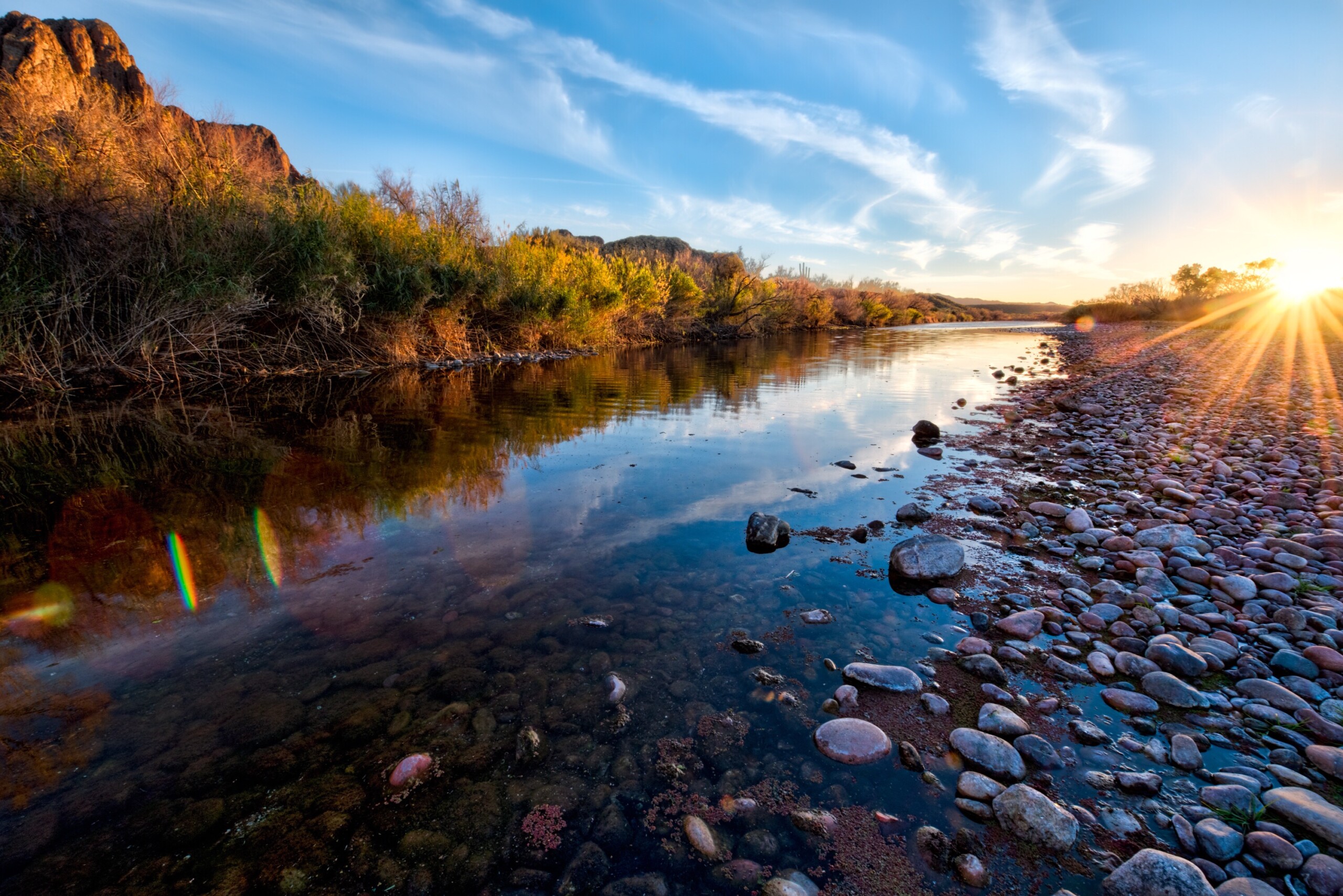
The White Mountain Apache Tribe in Arizona has been taking steps to mitigate the impacts of drought on their communities. The 1.6 million-acre Fort Apache Indian Reservation is located in east-central Arizona at the headwaters of the Salt River. The river produces over half of the streamflow entering Roosevelt Lake and supplies water to the Salt River Project and Phoenix Metro cities. This summer was a particularly dry summer for the tribe.
Since 1980s, this has been the worst year in regard to snow. That reflects in our water this past spring and summer when we look at levels in springs and our streams.
Previously on 2° Out West we interviewed members of the Tribe to talk about their water metering project. The aim is to better track and ultimately conserve the limited water supplies on the reservation. The water meter project is on-going and only becoming more necessary as drought continues.
On this episode of 2° Out West, we’ll once again talk with Tribal members to hear how drought is impacting their communities and how water meters can help be part of the solution.

Delbert Altaha Jr. is a member of the White Mountain Apache Tribe, residing on the Fort Apache Indian Reservation. He belongs to the Roadrunner Clan with ties to the Bear Clan. He lives with his wife, Ruby, and his son, Hershel.
His career began with the Bureau of Indian Affairs (BIA) Forestry, followed by a position as a boiler operator at his local sawmill. He has also worked at the Tribal Utility Authority as a water and wastewater operator.
In 2005, he transitioned from the Utility Authority to the Tribe’s Environmental Office, where he served as the Air Quality Technician. In this role, he was responsible for implementing data collection and reporting into the Air Quality System (AQS). He established the Quality Assurance Project Plan (QAPP) and learned to perform quality control measures. He worked to implement a quality air program in collaboration with the Environmental Protection Agency, the Institute of Tribal Environmental Professionals (ITEP), and other tribal air quality programs.
Cheryl Pailzote has worked with the Tribe for 20 years and currently serves as the Water Resources Program Manager. She has extensive experience in environmental science, watershed hydrology, and water rights.
Full Transcript
[00:00:00] Dave Papineau (Host): The impacts of climate change are becoming harder and harder to ignore. Many communities in the Interior West are on the front lines of dealing with these impacts. The White Mount Apache Tribe in Arizona has been taking steps to mitigate the impacts of drought on their communities. The 1.6-million-acre Fort Apache Indian Reservation is located in east central Arizona at the headwaters of the Salt River.
[00:00:22] The river produces over half of the streamflow entering Roosevelt Lake and supplies water to the Salt River Project and Phoenix metro cities. Previously on Two Degrees Out West, we interviewed members of the Tribe to talk about their water metering project. The aim is to better track and ultimately conserve the limited water supplies on the reservation.
[00:00:42] On this mini episode of Two Degrees Out West, we’ll once again talk with Tribal members to hear how drought is impacting their communities and how water meters can be a part of the solution.
[00:00:54] Delbert Altaha Jr: My name is Delbert Altaha. I’m a White Mountain Apache Tribe. I’m originally from here. I’m full-blooded Apache
[00:01:03] Dave Papineau (Host): Delbert’s background is with environmental protection. He’s worn a variety of different hats that have brought him into contact with many people around his community.
[00:01:11] Delbert Altaha Jr: I work for the Environmental Protection Office.
[00:01:15] I performed the air quality tests for my Tribe, and I monitor for PM 10, that is the little particle pollutions. Besides that, I monitor for the underground storage tank at the gas stations, and then I do the landfill inspection. So I wear different hard hats at different times.
[00:01:41] Yeah, man. But it’s a cool job, but a lot of it’s technical because it deals with reports.
[00:01:48] Dave Papineau (Host): Delbert says drought is a problem for everyone in the southwest,
[00:01:51] Delbert Altaha Jr: The whole southwest in the United States. It is dealing with this severe drought. We’ve noticed that the rivers are dwindling, they’re really low, and the lakes are starting to turn into ponds.
[00:02:07] The vegetations are drying up and it, it just affects everything.
[00:02:12] Dave Papineau (Host): Delbert says one of the scariest parts of the drought is the risk of wildfire.
[00:02:16] Delbert Altaha Jr: I’ve seen massive wildfires, especially during high winds and these red flag days. I’ve experienced it because I used to be a firefighter, and I used to drive a engine tanker around.
[00:02:32] And it is scary. Drought, man. It is tearing us up at, in the southwest right now and we’re afraid to open up the reservation because of wildfires. So most of our back roads are closed off right now. Yeah, it is pretty bad. I think when they pump water, they have, you have to have a certain amount of water going through the river.
But man, it is not even that much. It’s probably not worth pumping out now ’cause the waters are getting so low. Yeah, we’re in a stage two water restriction right now because of the water being low,
[00:03:16] Dave Papineau (Host): The water restriction is part of guidelines for how the Tribe manages water during shortages, the most lenient of which is a stage one restriction, which seeks to reduce water use by 10%.
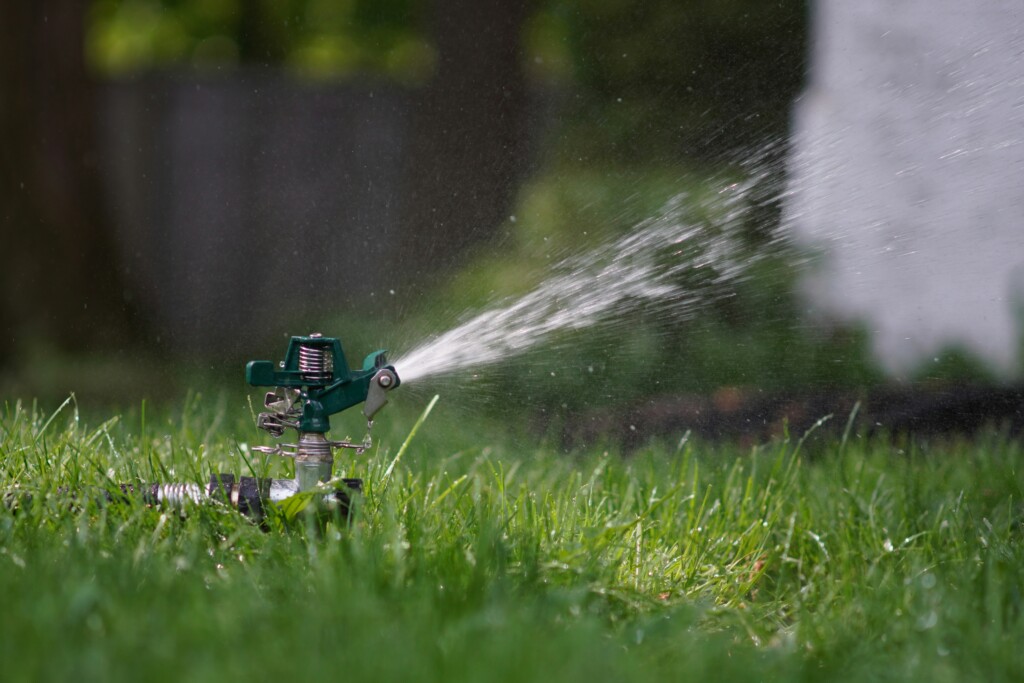
[00:03:29] Delbert Altaha Jr: Stage two water restriction is no more watering the lawns and no more washing cars. No more portable swimming pools. Just no more playing around with the water. Stage two you’re getting into a little bit of the red flag. And then stage three is like extreme and you gotta really take care of the water.
[00:03:54] Dave Papineau (Host): The most aggressive stage five reduction seeks to reduce water by 50% and limits water to only health and safety needs. This would be the worst–case scenario for the Tribe. Delbert worries that if the shortages got bad enough, there could be significant economic impacts for the Tribe.
[00:04:10] Delbert Altaha Jr: Our well fields are going down, and we don’t know how much longer we’re going to hang on, but it’s very crucial that we take care of every drop that we can.
[00:04:23] Then economic wise too, if there’s water shortage, then these business can’t operate because programs, departments, they need to have their restroom, their kitchen and everything operated to, to function. But I think it just is gonna affect e
verybody all the way around. Yeah. Even the animals out there, because they need water. I don’t know how much water they drink. These horses and these cattle, and everybody needs water.
[00:04:58] Dave Papineau (Host): So what can be done? Delbert says the Tribe needs to work with what water they have. He explained how the Water Resource Department is introducing the water meters to help get ahead of shortages. Delbert explained how he has seen the water meter program rolled out in the community.
[00:05:14] Delbert Altaha Jr: The water resource people are stepping in and going after these grant monies to help o
ur local utility authority provide these programs for the public. And I’ve noticed that they’ve been distributing letters and information about water meters. Hopefully it starts soon. So I think by metering the water you’re helping out your Tribe, economics, and then you’re helping out the water distribution, maintain the water to if there’s a water break somewhere they’ll notice it right away.
[00:05:54] I think water meters can be cost saving for people that know how to take care of their water. And then also, it’s gonna be a lesson learned for people that use too much water when they see their water bill.
[00:06:11] Dave Papineau (Host): To learn about the water resource program and how water meters are being implemented, I talked to Cheryl Pailzote, who oversees the program.
[00:06:18] Cheryl Pailzote: My name is Cheryl Pailzote. I am the water eesources manager for the White Mountain Apache Tribe. And I oversee the Water Resources Program.
[00:06:28] Dave Papineau (Host): She explains water meters help provide a better image of how the Tribe uses water.
[00:06:33] Cheryl Pailzote: One of the big things that we are using the water meters for is just to get a better idea of all the leaks that we have in our systems in the community.
[00:06:48] I think that there’s a lot of people who don’t know where, what their infrastructure looks like. So, they do not know that they may have a bad leak within their home or within their infrastructure.
[00:07:03] Dave Papineau (Host): Both she and Delbert mentioned the bad snow years and how that directly impacts the water available to the Tribe.
[00:07:10] Delbert Altaha Jr: This drought, we need really like maybe 30, 40 foot of snow to really kick the environment back into check. But no, we haven’t had that in a long time.
[00:07:23] Cheryl Pailzote: Since the 1980s – a record that we’ve been maintaining, this has been the worst year in regards to snow, and that reflects in our following spring and summer when we look at our springs and our streams.
This summer, we hardly have any water in our streams, and we rely on the river water, the surface water, for 35% of our water supply in the main town of White River. So, we really depend on Mother Nature. And so, if there’s no water in the river there, that means that we have to cut down on our water use in our community.
[00:08:09] Dave Papineau (Host): Those water limits are the same ones that Delbert talked about. They go from level one to a level five.
[00:08:15] Cheryl Pailzote: We also are seeing this in our wells in our northern communities where we’re over pumping our wells and now this summer we’ve been experiencing a lot of air in our water system because we’re taking more than what can be replenished.
And so because of that, we are having to, we’ve initiated our whole drought contingency plan, and we are now on water limits and so everybody’s needing to conserve water. So, the water meters are a great way for us to look and see where a lot of our leaks are at, or a lot of water use is being
done in the community and then, having the utility operators go out there and let them know that you have a major water break. Or if we have an entity or a community that’s using too much water and going to them and saying, “You need to conserve water.” So this has been a great way for us to really take a handle on managing and maintaining our water supply.
Especially when we’re so limited, like we are this summer
[00:09:23] Dave Papineau (Host): I asked Cheryl what is coming next with water meters in the community.
[00:09:27] Cheryl Pailzote: We had one of our staff members go out and pass out flyers to all those that will be having a meter installed in their homes. So that has been done already and just last week they’ve started i
nstalling meters in one of the communities. And you’ll see an operator there and where they’re planning to install a meter box and install a meter. And then, they will have someone leave a note on your gate, on your door if they can access it, to just let you know that the meter has been installed. You’ll also see it in your billing. And so instead of just seeing a flat rate of $35, you’ll actually see how much water you use that month and how much that’s costing you.
[00:10:16] Dave Papineau (Host): Delbert said he thinks education will be one of the most important parts of implementing the water metering program.
[00:10:23] Delbert Altaha Jr: When it really comes down to it, man, if there’s a real water shortage. It’s going to hit them, because, but I think it’s important that we educate, educate, educate the public. Even though we might sound like a broken record we still need to educate.
Water is very important, that it’s life giving, and we need to take care of it. And it. It’s a daily necessity and things like that.
[00:10:49] Dave Papineau (Host): The Tribe is working hard to educate on the value of water meters and saving water. One of the tools the Tribe leverages is youth education showing young Tribal members the importance and value of saving water in a drier world.
[00:11:03] My colleagues, Talia Bear and Kim Mitchell visited the Tribe’s Water Festival this year to hear what kids are learning about saving water. Talia Bear is the senior Indigenous people’s engagement manager. Kim Mitchell is a senior policy advisor.
[00:11:17] Kim Mitchel : What was one new thing you learned about water today?
[00:11:20] Water Fest Youth: About how it reflects into the sky and it goes back down.
[00:11:26] Kim Mitchell: Kim Mitchell here. I’m at a water festival in Fort Apache, Arizona with a whole lot of fourth and sixth graders. This is the second annual Project Wet festival for students in the White Mountain Apache community. We’ve got over 200 students here from six schools doing a bunch of fun hands-on activities about water.
They learn where their local water supplies come from and why it’s important to conserve as much as they can. We’ve got outside stations in this field focusing on topics like water cycle, watershed management, and water conservation. Communities here frequently experience water outages. In fact, rivers are at an all-time low right now, so it’s important to learn how saving water can help alleviate water shortages and provide more drinking water for their community and keep water in their rivers and aquifers.
[00:12:19] I’m asking students about what they’ve learned today.
So why do you think it’s important to save water?
[00:12:26] Water Fest Youth: Because it’s important to save water because there’s not that much water that we can drink. There’s 3% of fresh water that you can drink.
[00:12:38] Tahlia Bear: Why do you think it’s so important to save water?
[00:12:41] Water Fest Youth: Because we don’t have that much fresh and nicely done water, and we need water to, for the animals and for our bodies to keep going.
[00:12:49] Water Fest Youth: You need to save it because other people need water to survive and animals need water to survive.
[00:12:59] Kim Mitchell: Do you have any ideas about how you and your family
can save water?
Water Fest Youth: We can save water by when we brush our teeth in the morning and night
we can not leave the water running when we don’t need the water.
[00:13:14] Kim Mitchell: Can you tell me one way you can save water inside your house and outside your house?
[00:13:19] Water Fest Youth: For outside, if you’re done using the water hose, you should make sure that it’s turned off good. And for inside, don’t leave your water faucets on if you’re not using it.
[00:13:33] Water Fest Youth: To turn off the faucet, it can save up to eight gallons I believe.
[00:13:38] Dave Papineau (Host): Do you like what you’ve heard? Join our email list. Share this podcast with friends, family, and group chats alike.
Lastly, WRA would like to thank our sponsors who help make our work possible. Our champion sponsor is First Bank. Our signature sponsors are Denver Water, Torch Clean Energy, Scarpa, and Southwest Energy Efficiency Project. Our supporting sponsors are SolUp, Great Outdoors Colorado, BSW Wealth Partners, Meridian Public Affairs,
Group 14 Engineering, and Kind Design. Thank you for listening.
Please consider leaving a review after listening so more people can find our podcast. Also, please check out the further reading list below to check out all of the articles and resources that we mention throughout the episode.
2 Degrees Out West is a podcast from Western Resource Advocates, a regional non-profit organization fighting climate change and its impacts to support the environment, economy, and people of the West. WRA works across seven states to protect our climate, land, air, and water.
2 Degrees out West is a podcast for advocates and decision makers who want to fight climate change and its impacts across the West.
On 2 Degrees Out West, we talk with climate experts and advocates to bring you stories, experiences, and insights from their work in the places we call home.
WRA Mini Pods are quicker, educational shorts to keep you in the loop on key issues in the West. We want to bring you information in a digestible format about the most relevant issues we’re dealing with.
It is hosted by Dave Papineau.
Want to be part of 2 Degrees Out West?
- Email us with thoughts, suggestions, and interviewees at dave.papineau@westernresources.org.
- Follow us @westernresourceadvocates on Instagram.
- Join our email list to stay updated on when new episodes are released and calls to action on how you can help the West.
- Leave a review and share with friends!
 Spotify
 Apple
Apple
 Google Podcasts
 Overcast
 Amazon Music
 Pandora