
September 5, 2025
On the frontlines of extreme heat, drought, air pollution, and catastrophic wildfire, and saddled with rising utility bills that can climb to over $1,000 each month, it will come as no surprise to Nevadans that the state is in crisis.
The cause of Nevada’s problems isn’t a mystery. The state’s crisis is due to an extended reliance on dirty and price-volatile energy sources, like methane gas, and flawed systems that are leaving money on the table and the state stuck in the past.
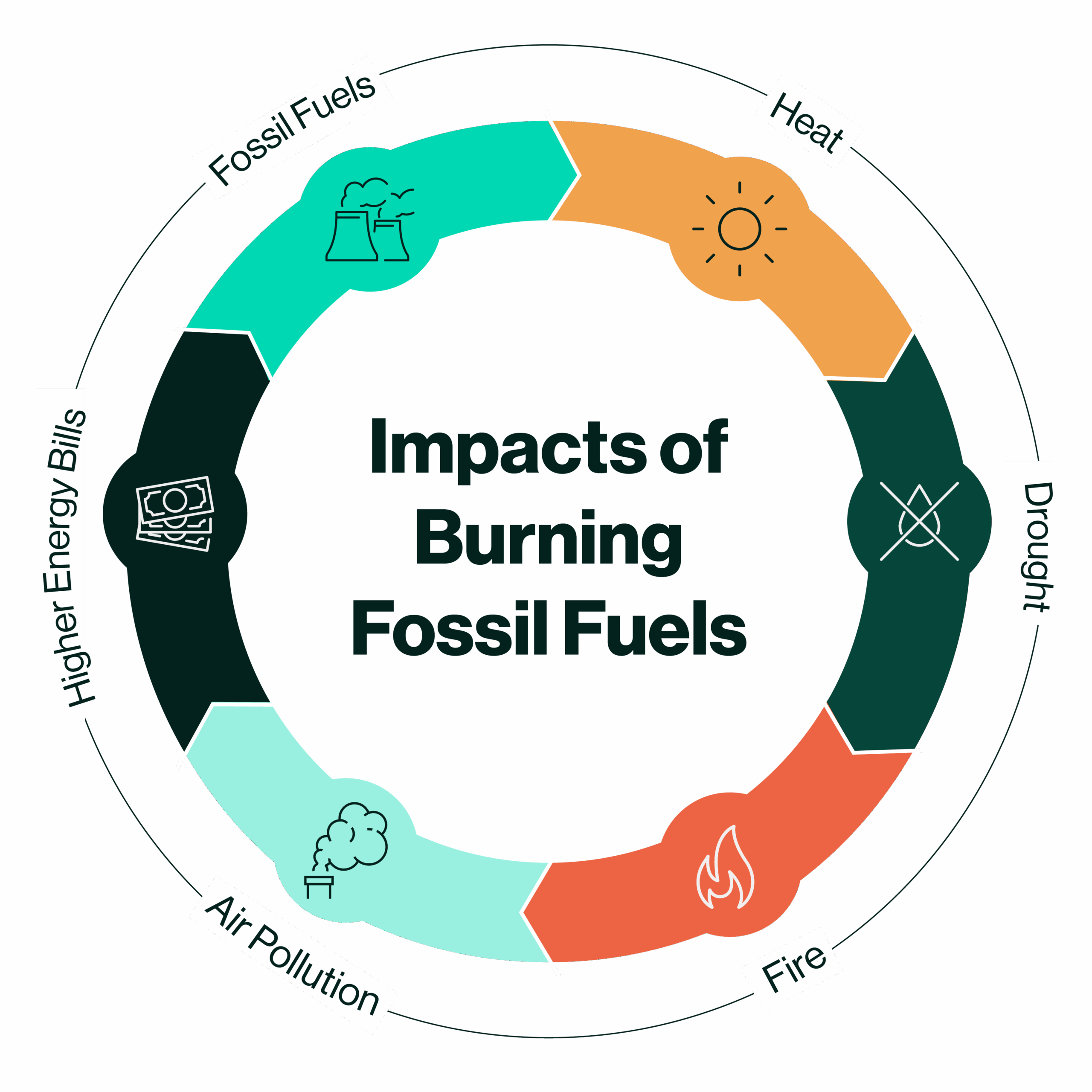 Burning fossil fuels for energy dumps pollution into the air that not only threatens human health, but traps heat —
- driving temperatures higher over time
- parching landscapes and diminishing precious water resources
- yielding bigger, hotter, and more catastrophic wildfires
- and straining Nevadans’ wallets as air conditioning can now make the difference between life and death.
These impacts aren’t out of a dystopian novel, nor are they distant problems for future generations to tackle. Nevadans are suffering right now: premature deaths, chronic health issues, far-reaching economic hardships, loss of tax revenue, and risk of collapsing ecosystems that the state depends on. The state’s major sources of pollution are to blame — transportation, electricity generation, industry, homes, and businesses — and urgent action is needed to right Nevada’s course.
It Wasn’t Always This Way #
The answer to Nevada’s problems is clear and has been for decades. The state needs to invest in clean, zero-emission energy and transportation, and fast. For many years, it was on the right track. Once a leader in the West, Nevada used to be on a clear path to securing a more resilient future for its residents. Under the state’s forward-looking policies like the Renewable Portfolio Standard, which requires a minimum percentage of a utility’s electricity to be powered by renewable sources each year, the state was making great strides in advancing clean energy. Nevada led the nation in per capita solar production in 2017. Two years later, the legislature passed laws requiring electricity providers to incrementally increase the amount of energy drawn from renewable resources to 50% by 2030 and set aspirational goals for the state itself to reach net-zero emissions by 2050, compared to 2005 baseline levels. Clean energy doesn’t just create more breathable air and affordable bills; it supports good-paying, stable jobs and drives investment in emerging industries like electric vehicle battery recycling, an industry Nevada is uniquely prepared to lead. According to E2, from 2023 to 2024 Nevada ranked in the top 10 states with the fastest-growing clean energy employment. 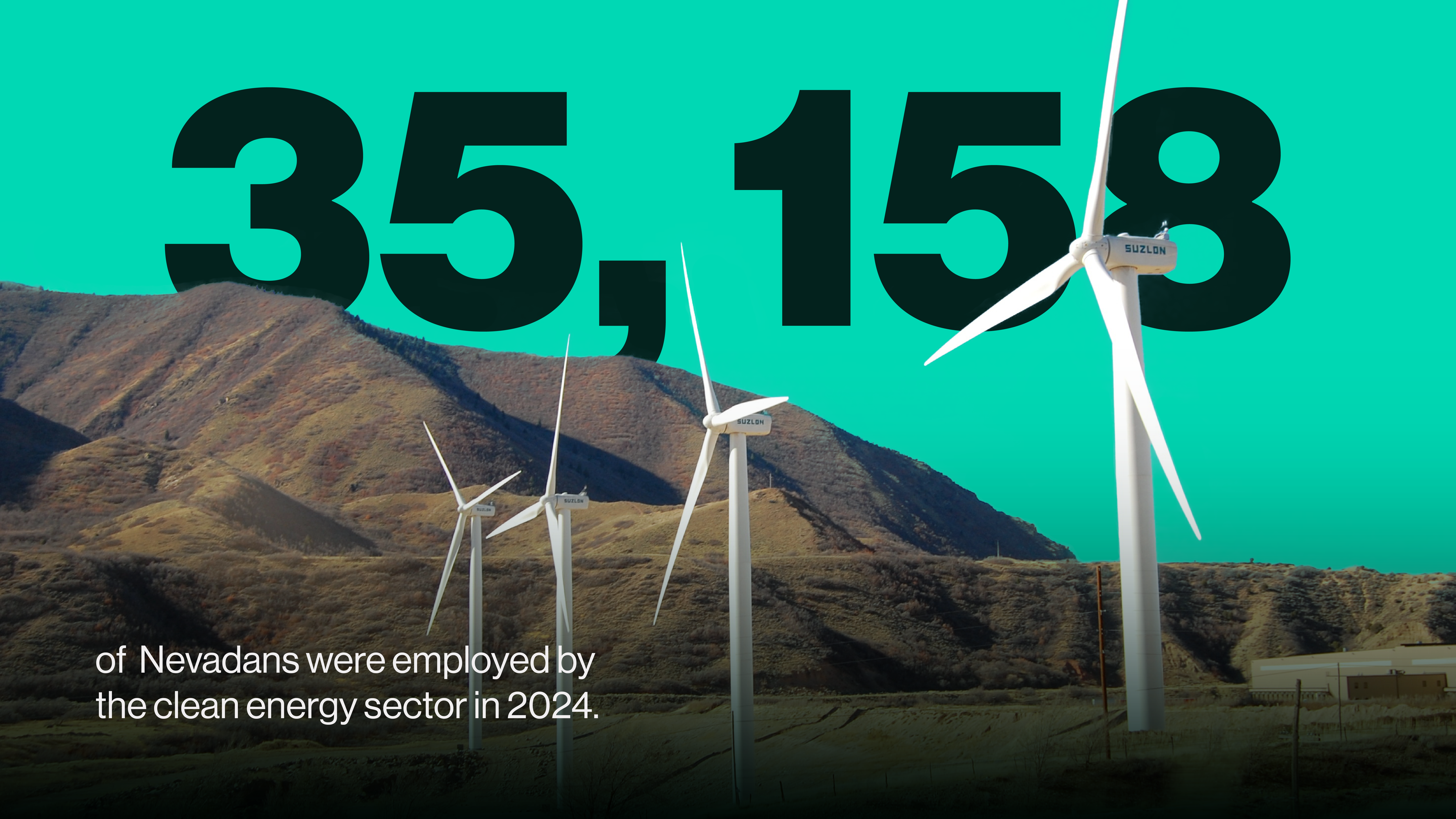 But in recent years the rapid progress on clean energy adoption has stalled. Gov. Joe Lombardo’s administration took office in January 2023, and within the first 100 days, the Office of Energy removed former Gov. Steve Sisolak’s 255-page statewide climate strategy. Then, in August 2024, the Office of Energy released a new 33-page plan, nearly a year and a half after removing the previous one. This slimmed down plan contains fewer actionable objectives, goals, policies, and timelines to realistically achieve clean energy targets. And while the state passed emissions reductions goals in 2019, there are no consequences if those targets go unmet. With no way to enforce the goals set in statute and new, unprecedented strains on the electric grid — primarily from the data centers needed to power the explosive growth in artificial intelligence — decarbonization timelines are being pushed further down the road. In fact, NV Energy, the state’s largest for-profit utility, has already lost ground on its clean energy commitments.
The Threats: Backsliding on Emissions Reductions and Skyrocketing Demand #
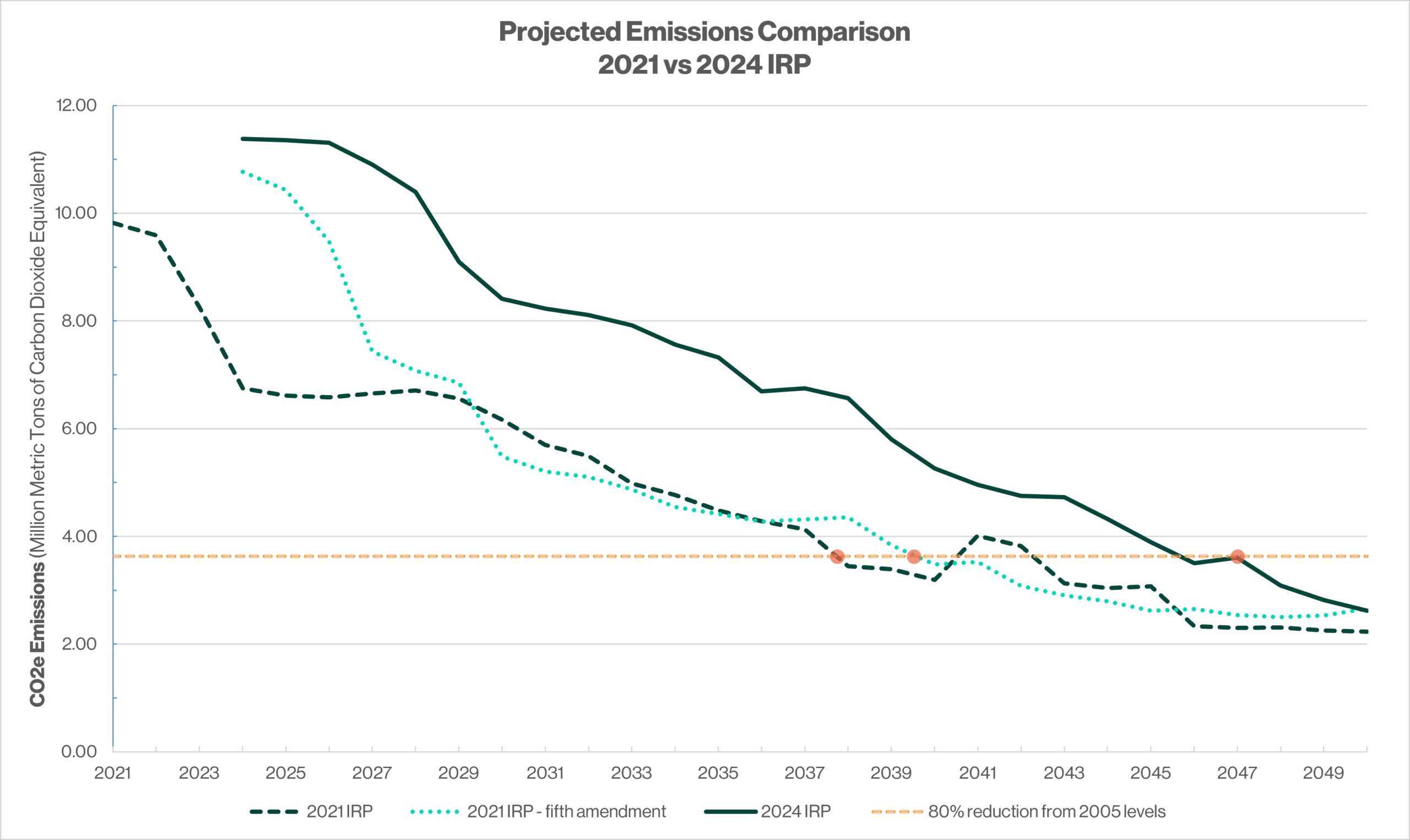
Back in 2021, NV Energy was already projected to miss the 2030 goal of reducing emissions 80% from 2005 levels, a mark scientists agree needs to be achieved to prevent the worst impacts of burning fossil fuels. The utility was set to meet this evidence-based target eight years late, in 2038, and recently that same benchmark slid nearly another decade down the road.
What primarily caused this backsliding? Flaws in the state’s energy planning process, called an integrated resource plan, or IRP, are to blame.
All energy decisions, clean or polluting, expensive or cheap, are approved through an IRP and later paid for by customers via their utility bills. So, an effective and transparent process is essential to protecting Nevadans’ health and wallets.
But Nevada’s IRP process allows NV Energy to make energy resource decisions behind closed doors, limiting the Public Utilities Commission of Nevada’s (PUCN) ability to make sure those choices are the most affordable, reliable, and cleanest options.
This imperfect system was on full display over the past five years as the utility sought to replace the energy from the North Valmy Generating Station, the lone coal plant in Nevada that was set to close. Meant to be replaced with solar and battery storage, Valmy became the center of controversy from 2022 to 2023 as the utility rapidly filed amendments to its 2021 IRP, citing “urgent reliability concerns” and walked back its clean energy commitments. This left little time for stakeholders and the Commission to fully review and evaluate the utility’s proposals. With an effective process, the concerns over reliability would have already been identified and addressed.
Rapid changes in utility plans, like converting Valmy to gas after first committing to solar, also threaten energy-related jobs, making it hard for employers and workers to predict if their paychecks are stable.
While commissioners expressed concerns over the rapid and piecemeal changes, the requests were ultimately approved, and under the fifth and final amendment to the IRP, Valmy was converted into a methane gas-fired plant — another polluting energy source — rather than solar. And in the utility’s recent 2024 IRP, the PUCN approved additional methane gas turbines at Valmy, further entrenching Nevada’s reliance on fossil fuels.
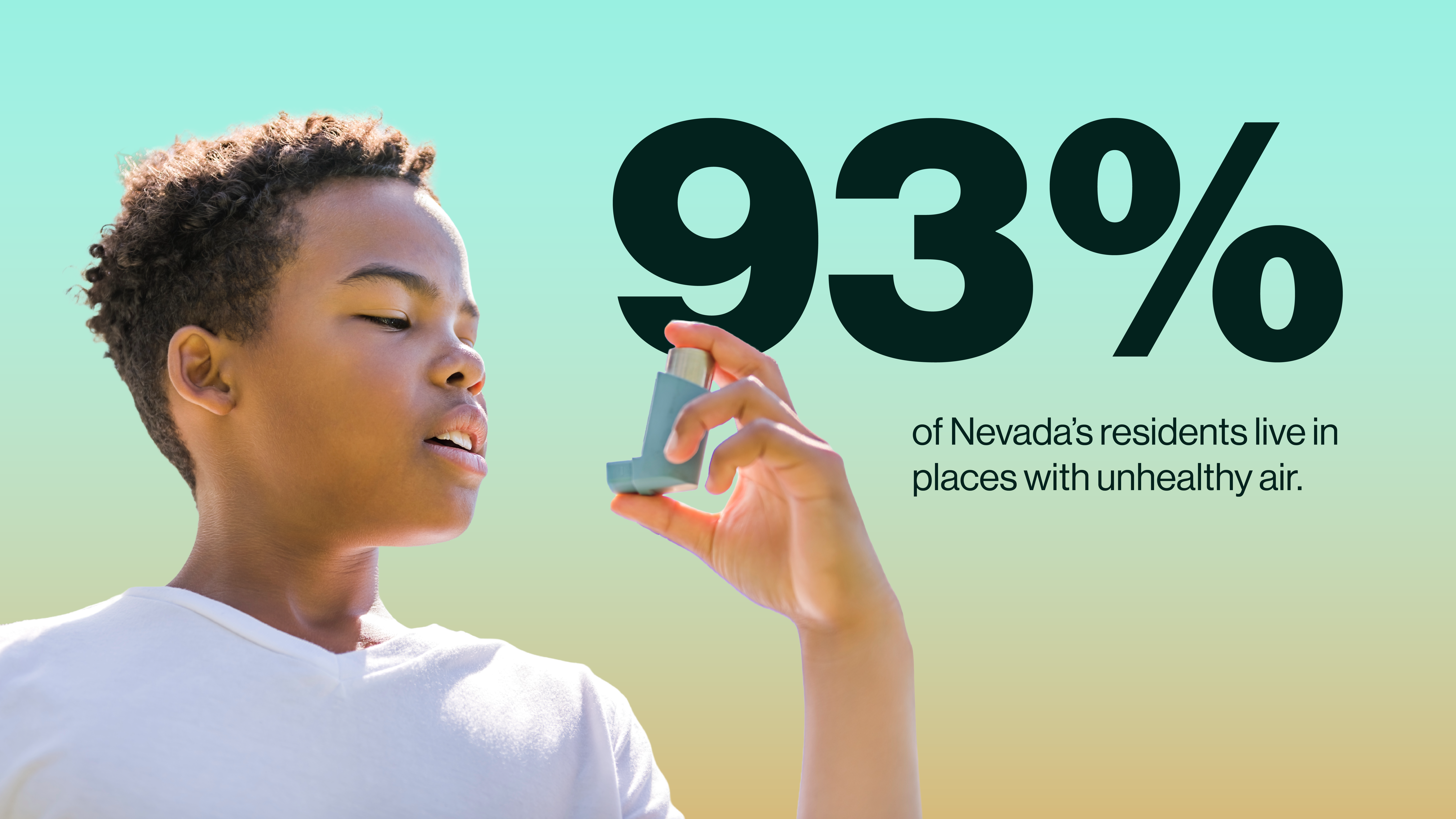
Burning methane gas isn’t just bad for the state’s challenges with air pollution, which are significant — 93% of Nevada residents live in places with unhealthy air, and Las Vegas and Reno rank in the top 25 most polluted U.S. cities — the fuel is also subject to huge swings in price as global markets shift. This leaves regular utility customers, already burdened by expensive bills, to cover the cost.
The most reliable way to protect Nevadans from price spikes is to ramp up investment in price-stable renewable energy sources. The conversion of Valmy from coal to methane gas, rather than solar, was a missed opportunity. With this change, the utility is now projected to reach 80% emissions reductions in 2047, nearly 20 years later than the target deemed necessary by the scientific community. Each year that passes without significant emissions reductions increases the threats to human health, life, and economic prosperity.
And the state is facing unprecedented demand for new energy, making IRP reform more crucial than ever.
Data centers, the physical home for the servers that power the internet, are popping up rapidly, and it’s primarily due to the explosive growth in artificial intelligence. While AI may seem straight out of the pages of sci-fi, it has real and growing impacts on Nevada’s energy and water resources.
To meet projected energy demands by 2033, NV Energy would need to build the equivalent of 78.5% of its entire system again, in just the next 10 years, according to WRA’s research. That’s like doubling the energy capacity used by the entire residential population of the Las Vegas Valley and surrounding communities.
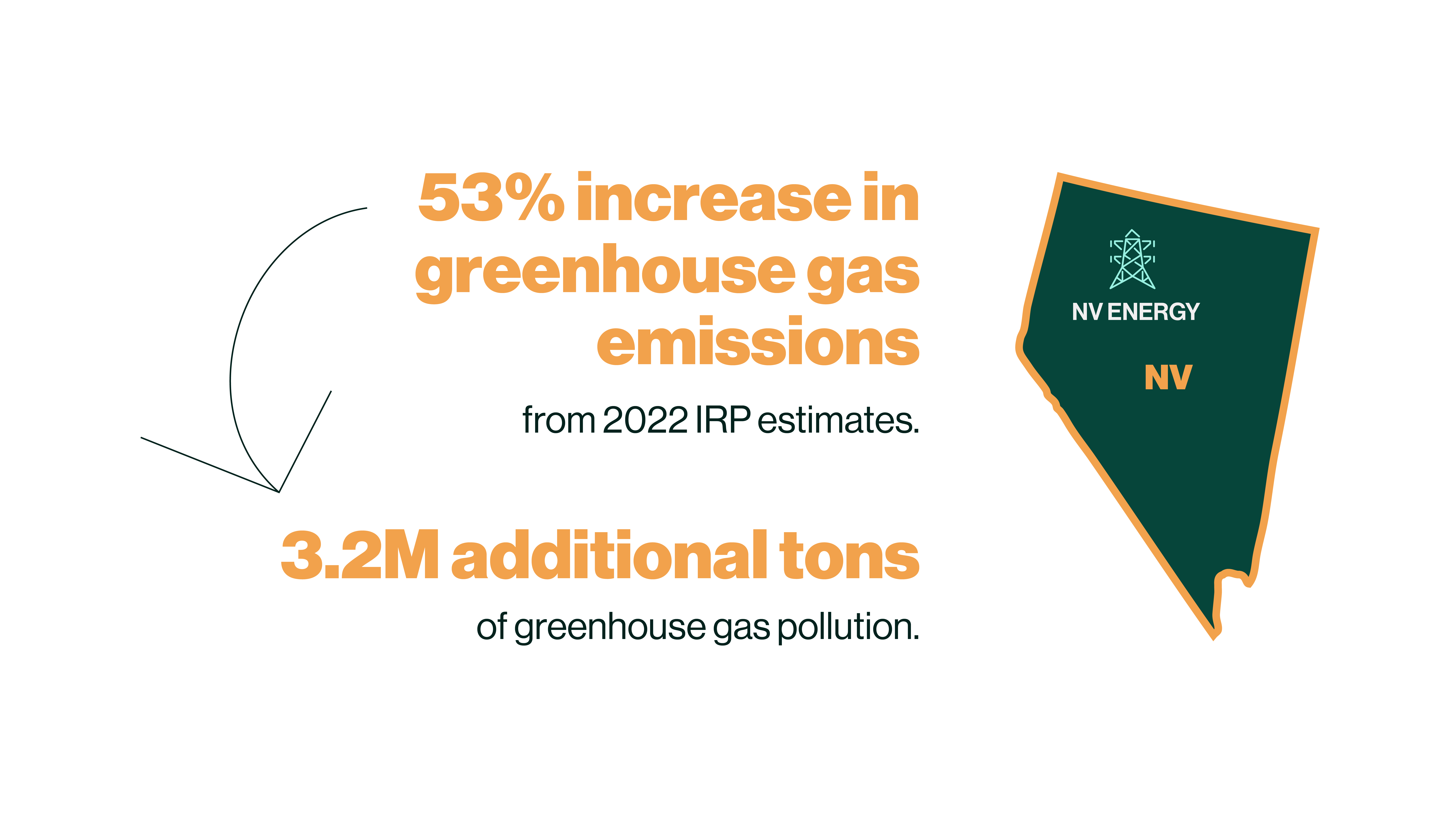 The utility’s forecasted emissions in 2024 jumped 53% from its 2022 estimates. This soaring energy demand amounts to 3.2 million tons of additional pollution, another factor behind the near 20-year delay in reaching key decarbonization targets.
As of October 2024, Nevada already had 40 data centers. In northern Nevada demand for these complexes was so high that the Reno Planning Commission voted to pause filing and issuing permits in February 2025 so it could better understand the possible effects.
Nevada is considered the driest state in the nation, making water one of its most scarce and precious resources, and data centers often require water to keep servers cool. In 2020, it was estimated that data centers used over 500,000 acre-feet of water nationwide, a number that’s certainly grown as data centers have expanded. One acre-foot is equal to approximately 326,000 gallons of water; Nevada’s annual allocation of water from the Colorado River is less than that — just 300,000 acre-feet per year.
As demand for energy and water skyrockets, it is essential that Nevada meets the moment with affordable, clean, and reliable energy sources. In WRA’s report, Data Center Impacts In the West: Policy Solutions for Energy and Water Use, we outline policy solutions to help the state get this right.
The Consequences #
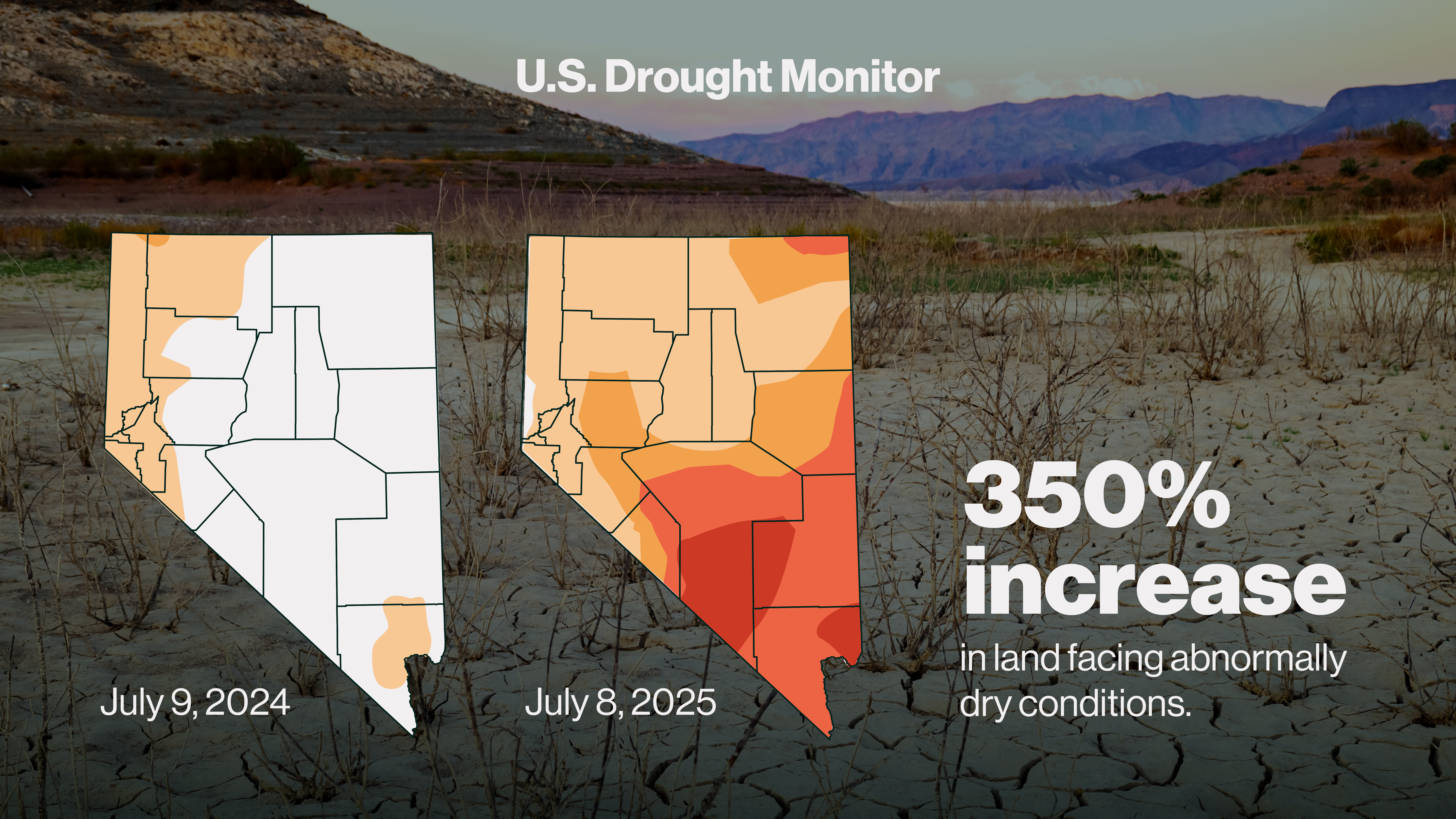
With energy demand soaring, a pattern of backsliding on emissions reductions targets, and unenforceable decarbonization goals, it’s no wonder that Nevadans are feeling the consequences. Las Vegas residents sweltered under record-high heat in summer 2024, with temperatures peaking at 120°F in early July. That summer the city recorded 74 days above 100°F, with an average high of nearly 105°F, marking the hottest summer period since record keeping began in 1937. In 2024, 513 Nevadans died from heat-related deaths — a record-breaking number and a 73% increase compared to the year before. Just weeks ago, thermometers climbed to 112°F, the hottest day of 2025 so far. Reno and Las Vegas lead the nation as the two fastest-warming cities. 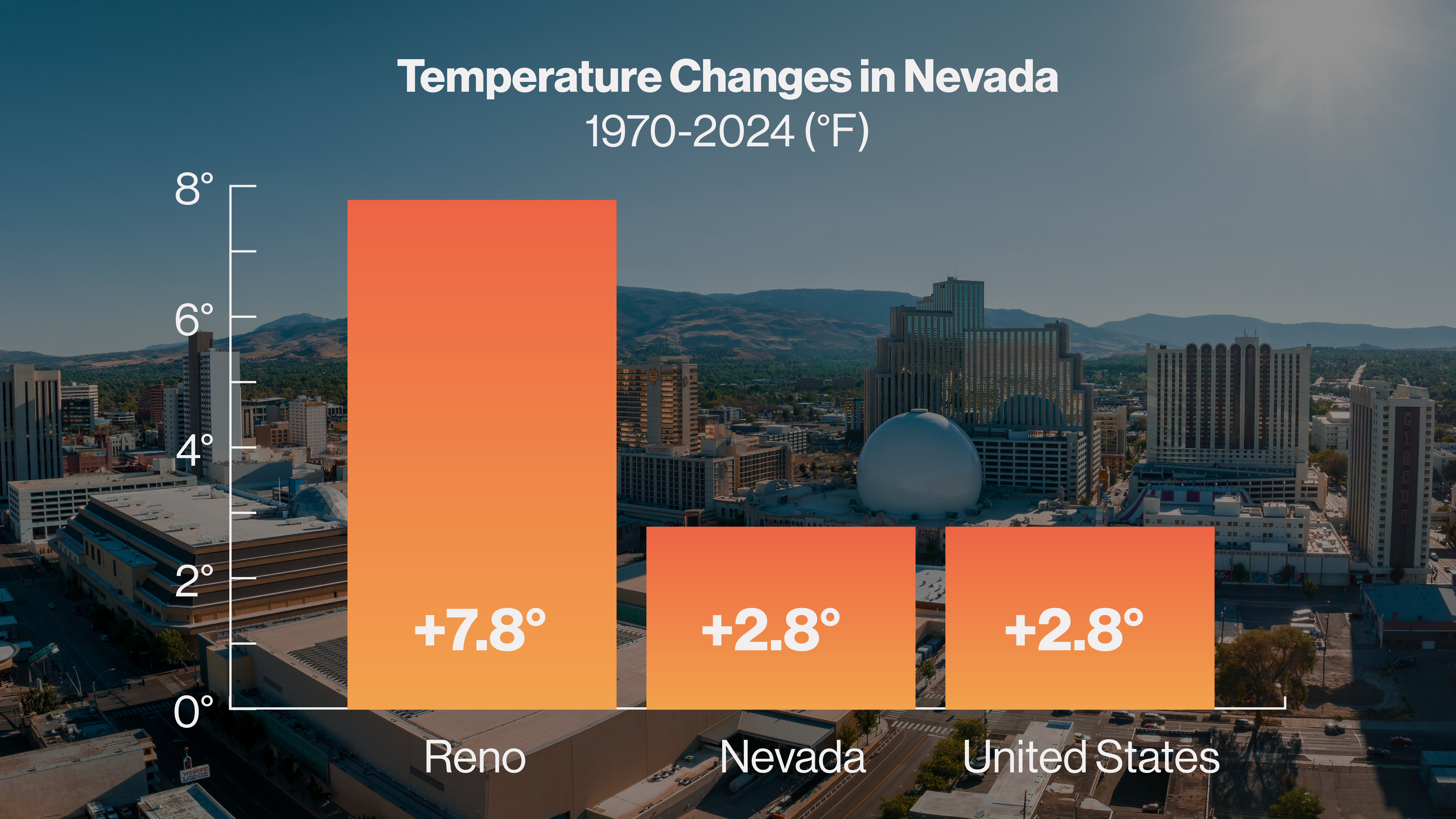 Heat strains already scarce water resources, pushing Nevada’s arid landscapes into further distress. In 2024, Las Vegas experienced no measurable rain for 214 consecutive days. This was the second time in 88 years that the city saw no rain for more than 200 days. And beloved wildlife suffers alongside human populations. In June, the Nevada Department of Wildlife captured, airlifted, and relocated 139 Desert Bighorn Sheep, the Nevada state animal, as expanding drought conditions diminished the herd’s food and water supply to critical levels. This is part of an ongoing and unsettling trend. From July 2024 to July 2025, the state saw a 350% increase in land facing abnormally dry conditions, according to the U.S. Drought Monitor. That means 99.63% of Nevada’s land is experiencing some form of drought, an area that’s home to an estimated two million residents.
 Parched landscapes mean dry and dying vegetation — the perfect ignition for hotter, stronger, more catastrophic wildfires. Nevadans know this well, as they’ve already seen home insurance rates rise by 24% from 2019 to 2024, with severe wildfire attributed as a major cause of rising premiums
. Eight out of 10 of the largest wildfires in Nevada history have occurred in just the last 25 years, and air pollution from a fire season that’s now year-round adds to the pollution hanging over landscapes and cities.
As things stand, Nevada is hindered by old processes, inefficient energy sources, and is unprepared to effectively mitigate the impacts to families and communities right now. The state needs bold leaders and a reformed energy planning process, or it risks compounding these threats for decades to come.
How to Get Back on Track #
The path forward may seem daunting, but the state’s challenges are not insurmountable and it’s not too late to get back on track. The sources of Nevada’s problems are clear — emissions from transportation, electricity generation, and industry, plus a continued reliance on fossil fuels — but known, effective, affordable solutions exist right now. It’s time to stop watching emissions reductions targets pass by unmet. Nevada is both on the frontlines of the mounting climate crisis and uniquely positioned to right its course. As residents suffer the effects of burning fossil fuels, there’s an opportunity for more elected leaders to take the helm and proactively advance policies that tackle these challenges while driving economic investments and jobs in the state. WRA is fighting for legislation, regulatory reform, and local policies that will ensure a smooth transition to affordable, dependable, and clean energy. That’s why we’re advocating to reform Nevada’s IRP process to prioritize the public’s best interests. Meaningful IRP reform is the first step state leadership can take toward addressing the state’s crisis, preventing further backsliding on emissions targets, ensuring transparency, and protecting jobs. We submitted comments to the PUCN in January 2025 outlining the ideal IRP process, as seen in other states in our region, along with robust legal support. Nevada still has the chance to chart a path toward a future that is not only sustainable, but abundant. And it will take tireless work from regulators, elected leaders, conservation groups, and people like you to get there. Add your name to express support for strong action to curb pollution and protect Nevadans’ way of life. Want more details on the causes of Nevada’s crisis, its impacts, and how to get back on track? Check out WRA’s report: A Cautionary Tale: How Nevada Went from Leader to Laggard.